

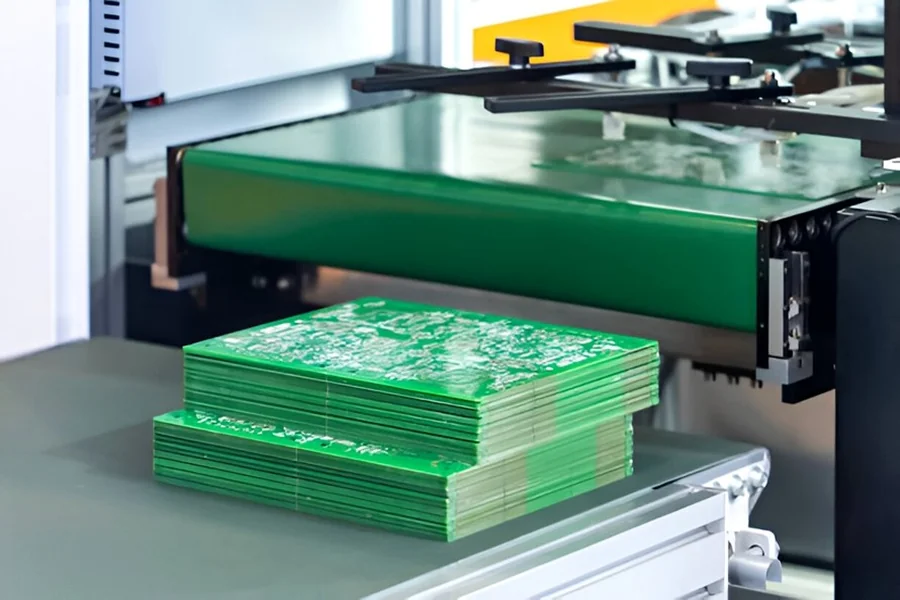
The PCB assembly process plays a critical role in transforming bare printed circuit boards into fully functional electronic assemblies that power nearly every modern device. From smartphones and laptops to medical equipment, industrial machinery, and automotive systems, PCB assembly ensures that the electronic components are correctly mounted and connected to form reliable circuits. This process is not just about soldering parts onto a board; it involves a carefully orchestrated series of steps that require precision, quality control, and advanced technology to meet today’s high-performance standards.
Understanding the Basics of the PCB Assembly Process
The PCB assembly process begins with a prepared bare board, which is fabricated with copper traces, pads, and vias. These boards provide the foundation for component placement, where active and passive devices such as resistors, capacitors, integrated circuits, and connectors are mounted. Assembly can use either surface-mount technology (SMT), through-hole technology (THT), or a combination of both, depending on the application. SMT dominates modern electronics because it allows for smaller, lighter, and more complex designs, while THT is still essential for components that need mechanical strength or handle high power.
Applying Solder Paste
The first major step in the PCB assembly process is solder paste application. Solder paste, a mixture of tiny solder balls and flux, is applied to the board using a stencil printer. The stencil ensures that the paste is only deposited on the exposed pads where components will be mounted. This stage is crucial, as the precision of solder paste placement directly affects the quality of solder joints later in the process. Even the slightest misalignment can cause connectivity issues, leading to failures in the final product.
Component Placement
Once solder paste is applied, components are placed on the board using pick-and-place machines. These automated systems use computer guidance to position each component with microscopic accuracy. In modern electronics, where components are often smaller than a grain of sand, this step requires advanced machinery capable of high-speed placement without sacrificing precision. Some assemblies may also involve manual placement for larger or specialized components that cannot be easily handled by automated equipment.
Reflow Soldering
After placement, the board goes through reflow soldering, one of the most important stages in the PCB assembly process. The board is passed through a reflow oven, where controlled heat gradually melts the solder paste, bonding the components securely to the copper pads. The oven operates in carefully monitored temperature zones to prevent overheating or damaging sensitive components. Once cooled, the solder joints solidify, forming permanent electrical and mechanical connections.
Through-Hole Soldering
For components that require through-hole mounting, a different approach is used. Instead of solder paste, these parts are inserted into pre-drilled holes on the PCB, and their leads extend through to the other side. The soldering can be done manually or via wave soldering, where the board passes over a wave of molten solder that attaches all the leads at once. While less common in compact consumer electronics, through-hole soldering is widely used in industrial, automotive, and military applications where durability and mechanical strength are critical.
Inspection and Quality Control
Inspection is an integral part of the PCB assembly process, ensuring that every board meets strict quality standards before moving forward. Automated Optical Inspection (AOI) systems are widely used to scan for issues such as solder bridges, missing components, or misaligned placements. For more complex assemblies, X-ray inspection is employed to check hidden solder joints beneath components like BGAs (Ball Grid Arrays). Electrical testing is also performed to verify continuity and detect shorts or opens, guaranteeing that the board performs exactly as designed.
Cleaning and Surface Treatment
During assembly, flux residues and other contaminants can remain on the board, potentially leading to corrosion or performance degradation. To prevent this, boards are cleaned using solvents, deionized water, or ultrasonic cleaning systems. Surface treatments may also be applied depending on the intended use of the product, ensuring that the final assembly has both durability and long-term reliability.
Final Assembly and Functional Testing
Once cleaned and inspected, the assembled PCB may undergo functional testing, where it is powered on and evaluated under real operating conditions. This step ensures that the device functions as intended before being integrated into larger systems or shipped as a finished product. In some cases, conformal coating or encapsulation is added to protect the board from moisture, dust, or harsh environments. At this point, the PCB assembly process is complete, and the board is ready for deployment in consumer electronics, medical devices, industrial controls, or automotive applications.
The Importance of an Efficient PCB Assembly Process
The PCB assembly process is a finely tuned balance of design, precision engineering, and quality assurance. Every step, from solder paste application to final inspection, plays a vital role in ensuring that electronic products function reliably. As devices become more advanced, with higher component densities and stricter performance requirements, PCB assembly technologies continue to evolve. Innovations such as 3D printing, advanced robotics, and artificial intelligence-driven inspection systems are shaping the future of PCB assembly, making the process faster, more accurate, and more cost-effective.
For businesses looking to bring electronic products to market, choosing the right partners for assembly and sourcing is crucial. Working with reliable PCB Suppliers USA ensures access to high-quality boards, faster turnaround times, and better compliance with international standards. A strong supply chain combined with precise assembly can make the difference between a successful product launch and costly delays.
