

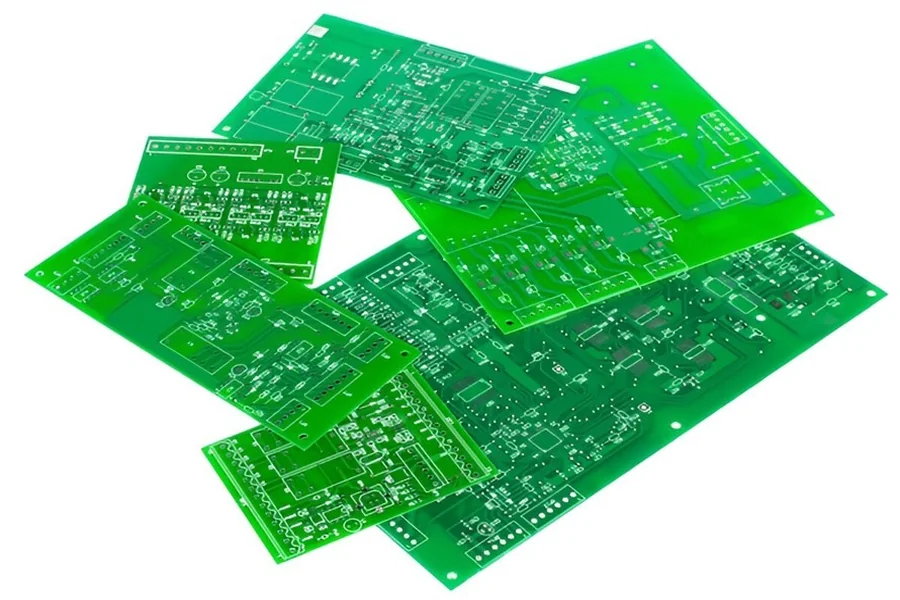
The FR4 PCB board is one of the most widely used materials in the printed circuit board industry. Recognized for its strength, reliability, and affordability, FR4 has become a standard across countless electronic products. The term “FR4” refers to a grade of flame-retardant fiberglass-reinforced epoxy laminate that provides both mechanical stability and electrical insulation. Its balance of performance and cost-efficiency makes it the preferred choice for manufacturers designing everything from consumer gadgets to industrial equipment.
Properties That Make FR4 PCB Board Reliable
FR4 PCB boards are highly valued for their mechanical robustness. The fiberglass reinforcement gives them exceptional tensile strength, preventing bending or breakage during assembly and use. Electrically, FR4 offers excellent insulation properties, ensuring signal integrity even at higher voltages. Thermal resistance is another strong point, with most FR4 boards operating effectively at temperatures up to 130–140°C. This ability to handle heat without deforming or losing performance is critical for modern electronics that generate significant power.
Another key reason FR4 PCB boards are so popular is their moisture resistance. They maintain stability in humid conditions, preventing short circuits or material degradation. This property makes them suitable for applications in varying environmental conditions, from indoor devices to outdoor systems.
Structure and Composition of FR4 PCB Board
At the heart of every FR4 PCB board is the substrate, made from woven fiberglass cloth impregnated with epoxy resin. This substrate provides the foundation for the board’s strength and dimensional stability. Over the substrate lies a thin copper foil layer that forms the conductive traces carrying electrical signals. To protect the copper from oxidation and accidental bridging, a solder mask is applied, typically in green but available in various colors. Finally, a silkscreen layer is printed on top to mark component locations, part numbers, and other assembly guides.
Manufacturing Process of FR4 PCB Board
The production of FR4 PCB boards begins with detailed circuit design using CAD software. Once the design is finalized, the FR4 sheets are prepared in the desired thickness. Copper foil is then laminated onto the FR4 substrate using high heat and pressure. Photolithography is applied to transfer the circuit pattern onto the copper, followed by etching to remove unwanted copper and leave only the required traces. Drilling is performed to create holes for component leads or vias, and plating processes ensure proper conductivity between layers. The board is then coated with a solder mask and silkscreen before undergoing electrical testing to verify its performance.
Applications of FR4 PCB Board
FR4 PCB boards are used in a wide array of applications due to their versatility. In consumer electronics, they serve as the backbone of smartphones, laptops, televisions, and home appliances. In the automotive sector, FR4 boards are used in engine control units, infotainment systems, and safety electronics. Industrial machinery, medical equipment, and telecommunications devices also rely heavily on FR4 PCBs for consistent performance. The ability to support single-layer, double-layer, and multi-layer designs means FR4 can be adapted to both simple and complex electronic systems.
Advantages of Choosing FR4 PCB Board
The popularity of FR4 PCB boards is not accidental. They offer a unique combination of low cost, mechanical durability, and excellent electrical properties. FR4 boards are compatible with both through-hole and surface-mount assembly methods, making them suitable for traditional and modern manufacturing processes. They also have predictable performance characteristics, allowing engineers to design circuits with confidence. Furthermore, their resistance to fire, as implied by the “FR” designation, adds a layer of safety in high-power or high-heat applications.
FR4 PCB Board in Modern Electronics Design
As technology advances, FR4 PCB boards continue to evolve. Higher-grade FR4 materials now offer improved thermal stability, lower dielectric loss, and better performance at high frequencies, extending their use into areas once dominated by specialized substrates. Manufacturers are also experimenting with hybrid designs, where FR4 is combined with other materials to achieve specific electrical or thermal goals without sacrificing affordability.
Conclusion and Call to Action
The FR4 PCB board remains a cornerstone of modern electronics manufacturing due to its durability, insulation properties, and cost-effectiveness. Its adaptability to a wide range of applications makes it a go-to material for engineers and designers worldwide. If you are planning your next electronics project or require dependable PCB solutions, working with an experienced FR4 PCB board manufacturer ensures that your boards meet the highest standards in performance, reliability, and consistency.
